If you asked most people on the peninsula what's caused the most disruption to daily life this year, they would point at the cranes. Between the Owen finishing out its final months of construction and Amara breaking ground on the old Pier 550 site, it is easy to assume that the noise, the trucks, and the general sense of a neighborhood mid-transformation all trace back to concrete pours and steel deliveries. That assumption is only half right. The change that actually rewrites your morning walk and your drive to St. Armands is not coming from any building site. It is coming from the intersection where Golden Gate Point meets Gulfstream Avenue, and it is being decided by a state agency that answers to Tallahassee, not to anyone who lives here.
The corner you actually cross every day
The Golden Gate Point Association announced late last year that the Florida Department of Transportation would launch a roadway renovation project starting at the Golden Gate and Sunset intersection in early January 2026. That timeline means the project has now been running for roughly seven months, with about five to go before it hits the one-year mark FDOT projected for completion.
The work itself is not cosmetic. Crews are raising the road level at the intersection by one to two feet to fix drainage on the Sunset side, adding a sidewalk-level bicycle lane, and shortening the pedestrian crossing distance. Drainage improvements will extend from the intersection down toward Harts Landing, and a separate but related piece of the project focuses on repairing the Ringling Bridge itself between Bird Key and St. Armands. During construction, lane closures happen mostly overnight between 9 p.m. and 7 a.m., with at least one lane open in each direction at all times, according to the GGPA's own project notice.
What that means in practice: the entry to the peninsula you have used for years is being rebuilt in place, and the version that emerges will have a dedicated bike lane where there wasn't one and a shorter, safer crossing at the light. Wikipedia's entry on the John Ringling Causeway confirms the broader scope, noting that 2026 improvements to the bridge include the addition of dedicated bicycle and transit lanes. This is not a Golden Gate Point-only project. It is a state corridor upgrade that happens to start at your front door.
The blue bridge required someone to ask
Here is the part that surprises people who assume infrastructure decisions are made once and left alone. In February 2025, FDOT tightened its statewide bridge lighting policy, limiting color displays to the recognition of government holidays and defaulting the Ringling Bridge to red, white, and blue. Any organization that wanted a different lighting scheme now needed direct approval from the state.
Golden Gate Point's aqua blue nighttime lighting, the color most residents associate with the bridge, was not guaranteed to survive that policy change. It came back because people asked. The city of Sarasota later confirmed that FDOT agreed to restore what it called the "serene aqua blue palette" that had been in place since the decorative lighting display began nearly four years earlier, a decision the city credited directly to community request. The GGPA's own newsletter framed it plainly: a grassroots effort, backed by local politicians, brought the aqua blue back on a nightly basis, with red, white, and blue reserved for national holidays only.
The lesson here is not really about lighting. It is that the elements of this neighborhood that feel permanent, the color of the bridge at night, the shape of the sidewalk at the entrance, are administered by an agency with statewide priorities and a default setting that does not favor any one neighborhood's preferences. Golden Gate Point gets what it gets on those fronts because people organize and ask, not because the peninsula owns the outcome by right.
The buildings, for the record
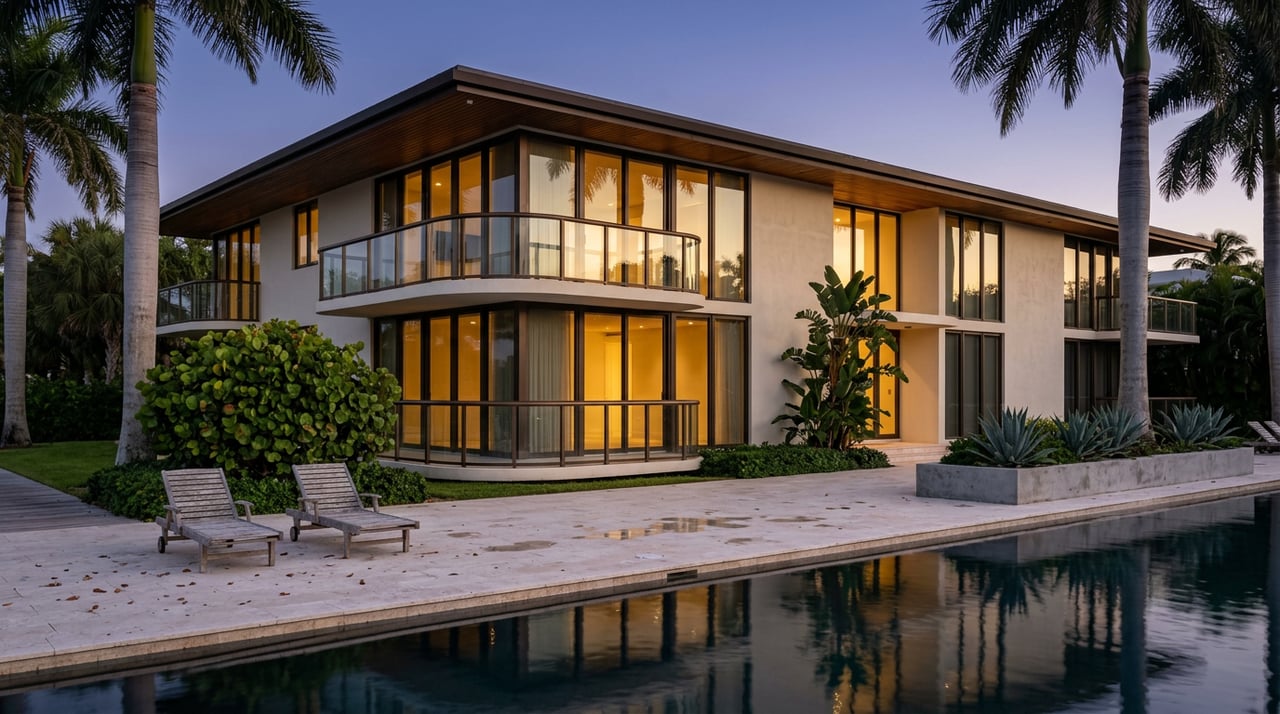
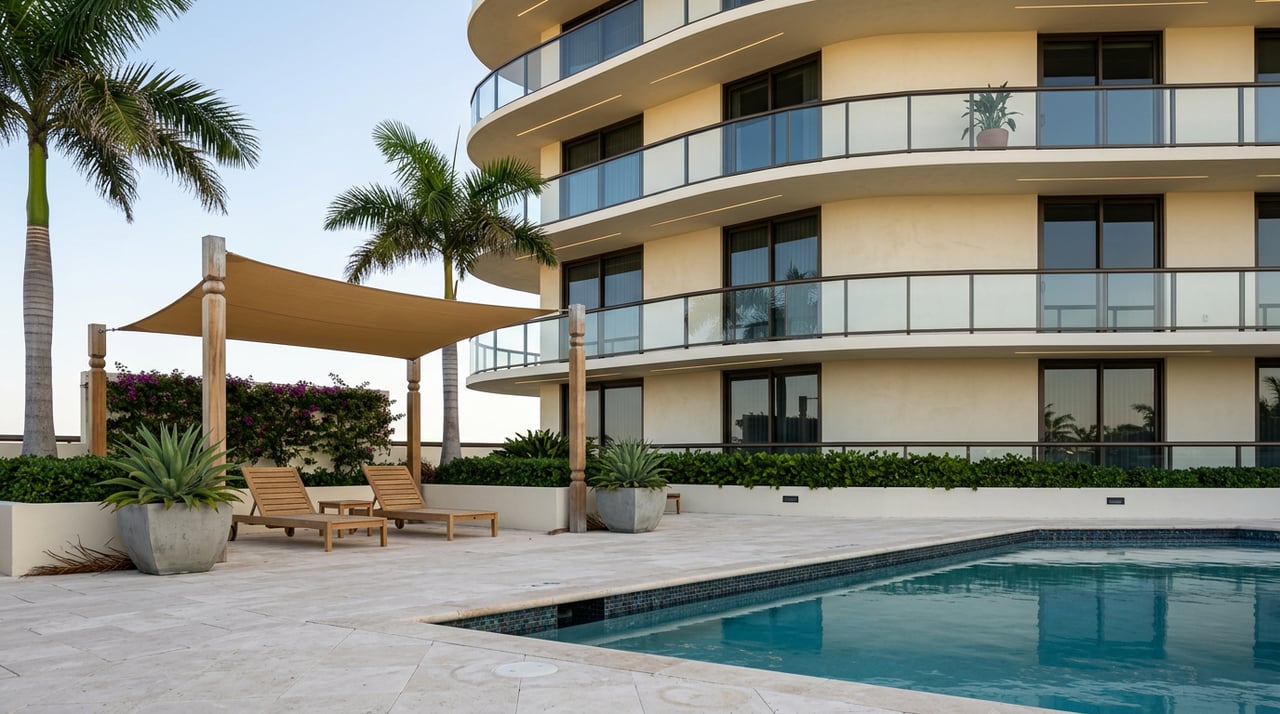
None of this is to say the construction on the peninsula itself has been invisible or without friction. The Owen Golden Gate Point, developed by the Ronto Group at the southern tip of the peninsula, opened and became move-in ready in June 2026, according to SRQ Daily's coverage of the announcement. KW Property Management now handles the association, with Melissa Dale as the on-site manager. The building includes a fenced dog park and a walking path that circles the property, so if you have noticed new dogs and new faces on your evening walk this summer, that is very likely where they are coming from.
A second project, Amara on Sarasota Bay, broke ground in early 2026 on the former Pier 550 site on the peninsula's east side, with a two-tower, fifty-four residence plan and an estimated completion window of 2027 to 2028. That is a longer runway than the road project or the Owen's now-finished construction, which means the eastern edge of Golden Gate Point will remain an active site for at least another year or two.
What kept the Owen's construction from creating gridlock on a peninsula with limited street parking, back when it was still overlapping with work at SIX88 and Peninsula Sarasota, was a piece of coordination that rarely gets mentioned outside GGPA circles. The association worked with the general contractors to route workers off the peninsula entirely: Owen crews parked in the 550 construction lot, while subcontractors on SIX88 and Peninsula Sarasota were directed to the Van Wezel lot and shuttled in by van, paying the city fifty dollars per car per month for the privilege. It is the kind of unglamorous fix that does not show up in a listing description but explains why street parking on the Point held up better than three simultaneous job sites would suggest it should have.
What's left on the calendar
If you are trying to picture the rest of the year, here is the shape of it. The FDOT road project should be wrapping up sometime around January 2027, based on the one-year timeline announced at its start. Amara's construction will still be underway well into 2027 and likely into 2028, so the eastern stretch of the peninsula stays an active site for a while yet. Just up the bayfront from the peninsula's entrance, near the Van Wezel lot that has doubled as overflow parking for GGP's own construction crews, the Bay Park Conservancy has its own 2026 milestones landing this year, including a new Town Square gathering space along the Bay's Cultural District promenade and the opening of a Resilient Shoreline segment designed to handle storm surge along about a mile of bayfront. Neither project is on Golden Gate Point, but both sit close enough to the peninsula's daily walking radius that they will change what a loop toward downtown looks and feels like by the end of the year.
None of this required a vote from the people who live here. The road gets rebuilt because the state scheduled it. The bridge stays blue because someone asked and FDOT said yes. The buildings finish on the developers' timeline, not the neighborhood's. What Golden Gate Point residents actually control is smaller and more specific: showing up when a lighting policy threatens something the community values, and organizing the unglamorous logistics, like where a subcontractor parks, that keep a small peninsula livable while everything around it gets rebuilt at once.
If you're weighing a move to the peninsula, or thinking about what a listing here looks like once the road project wraps and Amara tops out, Teresa Tyrrell & Company tracks these changes as they happen, not after the fact. Schedule a Private Consultation to talk through what this year of construction actually means for your specific building, your view, and your timeline.